

Fiber Inspection
Fiber optics convert electronic/binary information into optical signals through digital light pulses. The signal moves through a long fiber optic cable until the end of the line where it is converted back into its original electronic/binary form that is readable by computer systems. Optical fiber is made of a thin glass rod that is surrounded by a protective plastic coating. The light that is injected into the core of the glass fiber will follow the physical path through the internal reflection of light. It is necessary to constantly evolve fiber testing processes in order to ensure the integrity of the optical signals stays intact through complex networks.
There are two types of fiber based on the way light travels through it, multimode and singlemode. Multimode fiber is easier when coupling to other light sources and fiber. It also has a more simplified splicing process and lower cost transmitters. On the other hand, it has a high optic loss and a low bandwidth limit for short distances. Singlemode fiber has a much higher performance in regard to bandwidth and optic loss. Due to the small core size of singlemode fiber, more expensive transmitters and alignment systems are needed. Even with the downside of the more expensive equipment needed when working with singlemode fiber, it remains the best fiber optic solution.
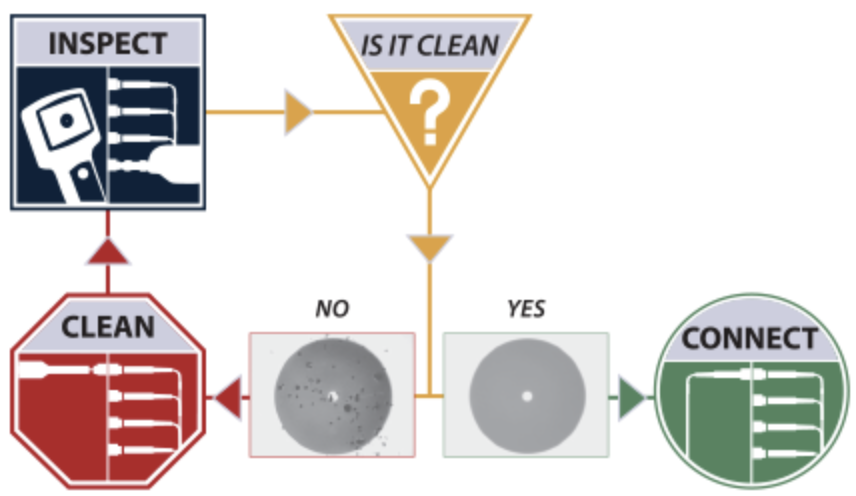
Dust, water, and oil are just a few of the main contaminants that a fiber end-face comes in contact with. These contaminants disrupt the flow of light and can cause network outages. It is essential to use fiber inspection tools and cleaning kits to avoid and resolve these disruptions.
Avalon Test Equipment carries a variety of fiber inspection equipment from top manufacturers (VIAVI, EXFO, ODM, and more) to meet your testing requirements.
Rent or purchase from Avalon and Test With Confidence®.
Read More
Read Less


VIAVI Solutions OMK Fiber Insertion Loss & Inspection Kit

VIAVI Solutions Fiber Troubleshooting Kit for OTDR & Fiber Inspection

VIAVI Solutions OneAdvisor-800A CAA with Accessories

VIAVI Solutions OneAdvisor-800A OTDR SM with Accessories

VIAVI Solutions OneAdvisor-800A CAA OTDR SM with Accessories


VIAVI Solutions

VIAVI Solutions FiberChek Sidewinder Autofocus WiFi Probe Telescope
